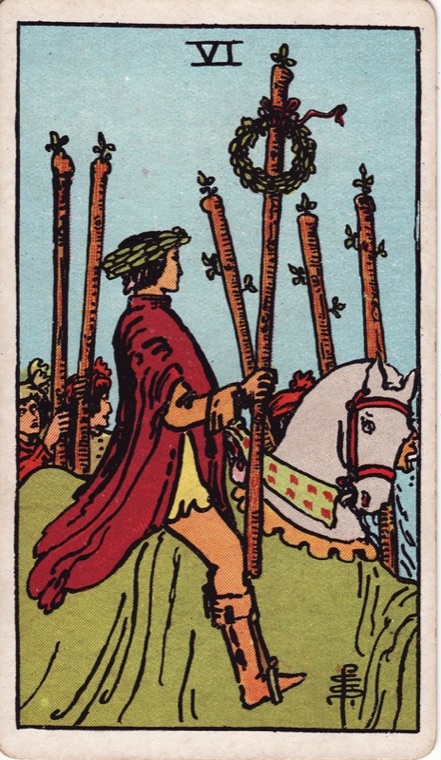
A laurel-crowned rider lifts a green-wreathed wand high on a white horse, one robed follower walking behind.
Six of Wands
Upright
Ride in — this is your victory lap. The Six of Wands arrives when your work finally gets seen: the win, the promotion, the applause you didn't have to fish for. Enjoy the crown, but notice the card's quiet truth: the crowd lifts you, and lifted people owe the crowd something back. Accept the recognition with your chin up, then immediately ask what it makes possible next.
Reversed
The laurels feel heavy — maybe the praise didn't come, maybe it came and impostor syndrome swallowed it whole. Reversed, the Six of Wands warns against chasing applause as a scoreboard, or quietly falling off the horse when it doesn't show. Your worth isn't recalculated by every round of clapping. Go back to the work that matters, and let a real win — not a louder one — rebuild your footing.
Where is this energy showing up in your life right now?
Why this card looks like this
The painting is not decoration — every object in it is doing a job.
The rider wears a laurel wreath and carries a wand crowned with a ring of greenery, so the victory shown here is public and ceremonial — it has been granted, announced and crowned. The white horse and the robed follower keep the moment in motion rather than static: the triumph is not over, it is being carried out in front of people.
The greenery on the wand is a wreath, and it echoes the wreath on his helmet — the same award claimed twice, once on the body and once in the hand, which is how you know the honour is real and not borrowed. The procession behind him is a single figure rather than a crowd: he wins alone and still brings witnesses.
Ask what the laurel is for, and who that single follower is — a victory with one witness is not the same as a victory everyone agrees happened. The real question on this card is whether the crown still fits, or whether he rides it out of habit.