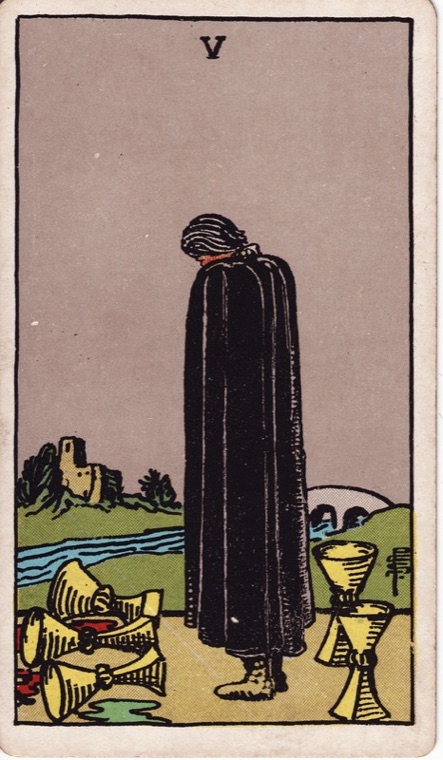
A black-cloaked figure stands with their back turned over three spilled cups, two still standing beyond.
Five of Cups
Upright
You are standing with your back to two cups still standing, staring at the three that spilled. The Five of Cups is real grief — a breakup, a disappointment, a version of the future you had already decorated in your head. Let yourself mourn it properly; this card gives you permission. But when you are ready, turn around. Something in your life is still intact, and it is waiting to be acknowledged.
Reversed
The turning has begun. Reversed, the Five of Cups shows you lifting your head out of the loss — accepting what cannot be recovered, forgiving yourself, noticing who stood by you the whole time. Grief does not have to be finished to be released. Take one step toward the living, not the spilled.
Where is this energy showing up in your life right now?
Why this card looks like this
The painting is not decoration — every object in it is doing a job.
A black-cloaked figure stands with their back to you over three cups that have been knocked over, while two cups still stand upright further away, with a bridge and a few houses in the far distance. The picture is about attention: the turned back refuses the loss, the fallen cups make the loss undeniable, and the two standing cups plus the bridge are what the picture has left for you. The cloak hides gender and face, which means this grief is not a party's loss but a private one.
The bridge in the distance is a narrow plank crossing that takes no route you can see from where you are standing, so the way out exists but requires turning around, and the figure casts their own shadow forward onto the spilled cups, which is a small cruelty of the painting: the darkness the mourner carries lands precisely on what was lost. Most readers notice the spilled cups and never notice the shadow.
Ask which cup they are refusing to look at, because the card is less about the loss than about the turning. Then move them gently toward the two that still stand and toward the bridge, and ask what remains available today that they have written off, and never let the reading conclude there is nothing left, because the painter deliberately kept two cups standing.